How digital parking permits replace hang tags and window stickers
A hang tag shows a permit was handed out once; a digital permit ties parking to the plate, so the list stays right as residents and cars change.
In short
- A hang tag proves a permit was handed out once. It can’t tell you whose car it’s hanging in tonight.
- A digital permit is written against the plate. Residents add their own cars, guests register from a link, and move-outs end on a date.
- Your enforcement provider’s patrol checks plates against the same list your office keeps.
- You don’t have to pull every tag on day one. Bring the list you have, and residents confirm their cars.
A hang tag tells you a permit was handed out once. It can’t tell you whose car it’s hanging in tonight, or whether that person still lives there. A digital permit ties parking to the car’s license plate instead, on one list that your office, your residents, and your enforcement provider all read. Residents add their own cars, guests register from a link, and when someone moves out, their parking ends on the date you set. There’s nothing to print, mail, or collect.
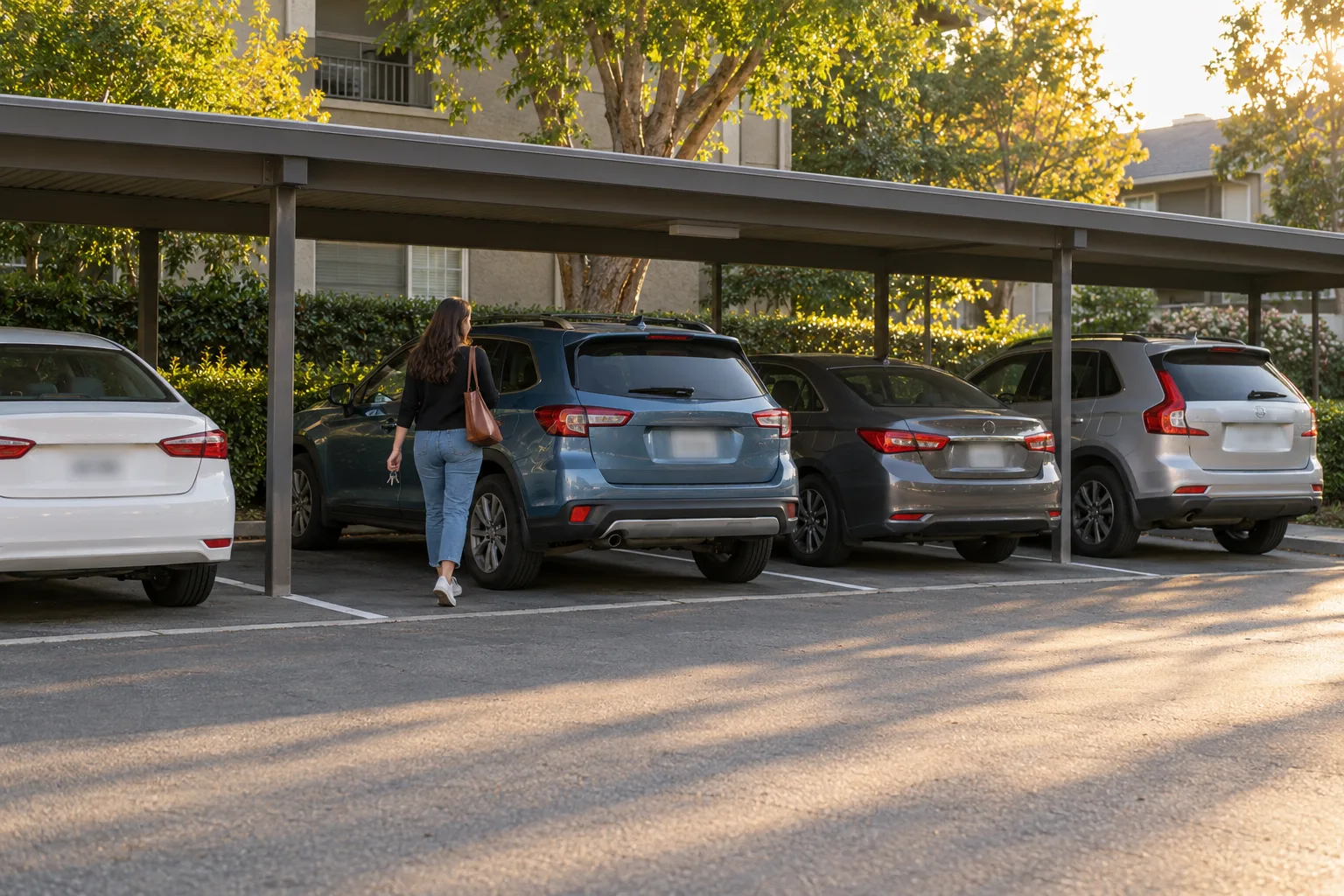
Because it travels. A tag isn’t attached to anything but a mirror, so it goes wherever the mirror goes. A resident lends it to a friend for the weekend. A roommate moves out and takes the car, tag and all. A sticker leaves with a car that was sold. The office prints a replacement for the one lost in the move, without knowing whether the old one is still out there.
None of that takes anyone being sneaky. It’s just what happens to a piece of plastic over a few years of move-ins and move-outs. After a while, a tag only proves that a permit existed once. The paper list in the office says one thing, the windshields say another, and whoever patrols at night is left judging a tag through the glass with a flashlight.
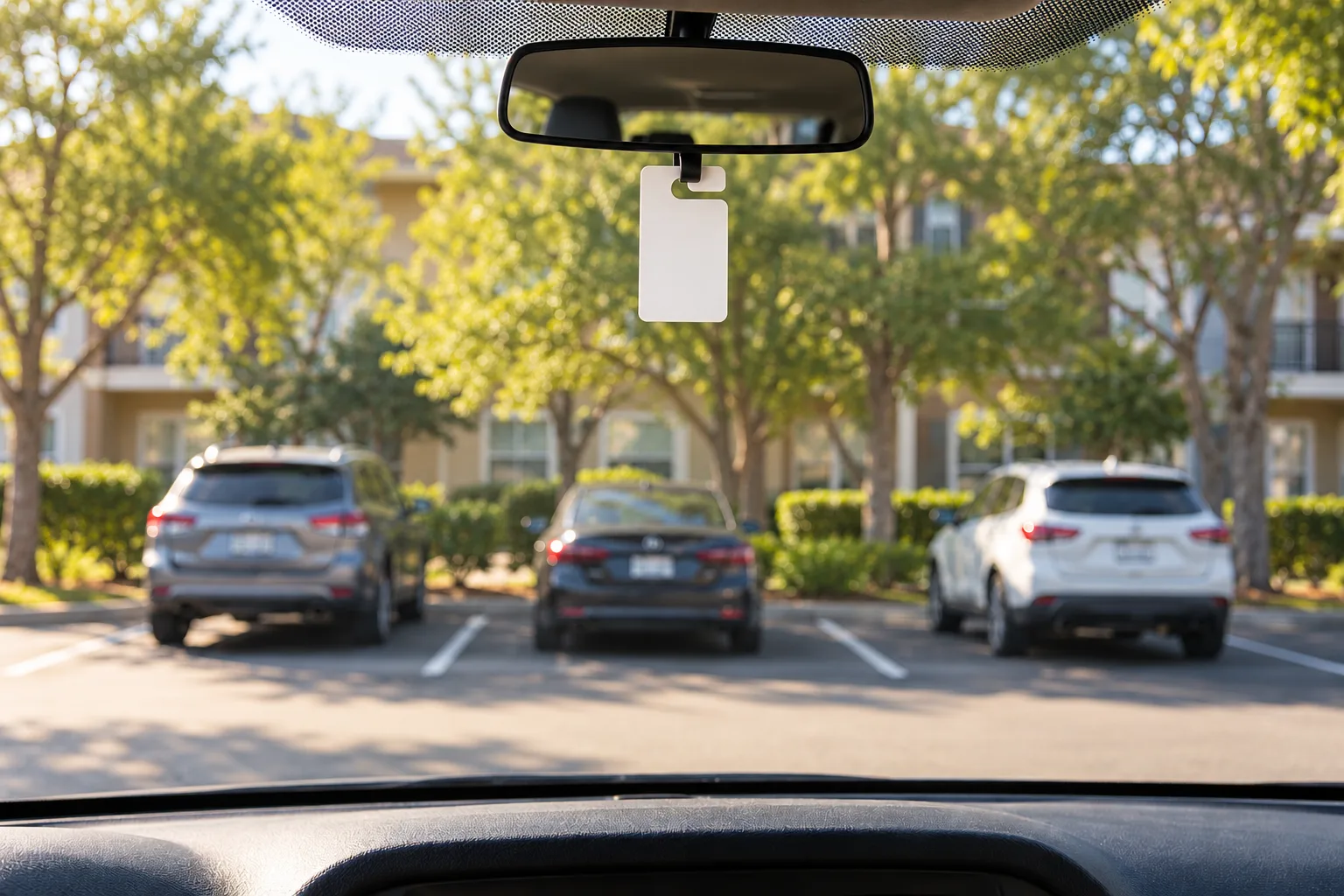
Before Parkva · a hang tag
It’s the same permission, written against the car’s license plate instead of printed on a tag. The plate is already on the car, and nobody lends their plate to a friend.
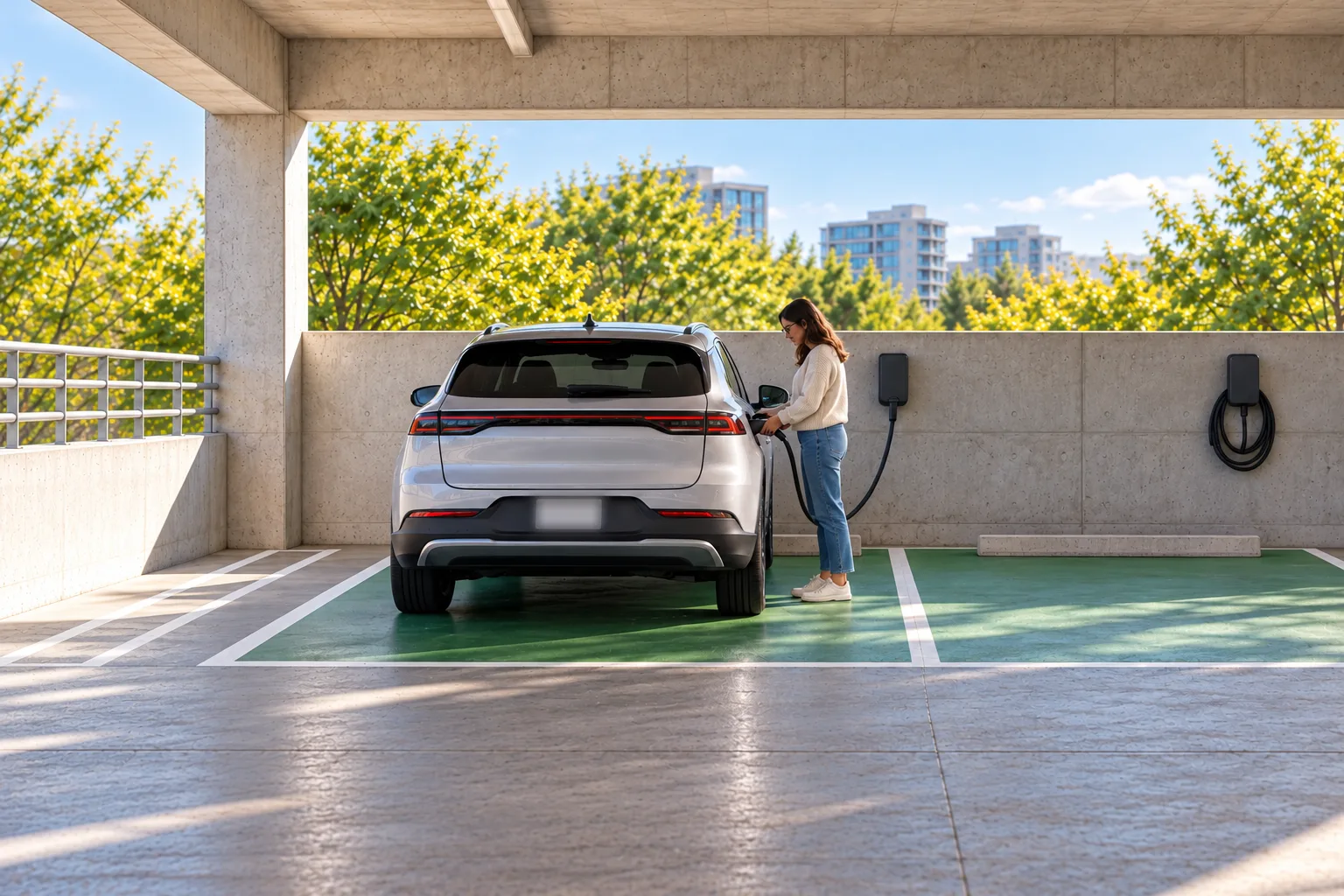
In Parkva, residents register their own cars from their phones. There’s nothing to download and no password to remember: they sign in with a link or a code sent to the email or phone the office has on file. Once a car is registered it’s permitted in the resident areas, and the portal says so in plain words: you’re all set to park, nothing to print or display.
Guests work the same way. A resident shares a link from their phone, or the guest scans the code on the parking sign, enters their plate, and picks how long they’re staying, within the limits you set. No trip to the office, no borrowed tag, and the pass ends on its own.
This is where tags cause the most quiet trouble, and where a digital list saves the most office time.
A new resident can be set up before they arrive. Parkva sends them an invitation a week ahead, they register their car, and their parking starts on move-in day. Nobody has to remember to hand over a tag with the keys.
A move-out is a date, not a chore. You set it, or it comes in with your rent roll. Parkva reminds the resident a week before, and their parking ends after their last day. If one roommate leaves and the other stays, the person staying keeps their car on the list. There’s nothing to collect at the door, and no tag left hanging in a car that doesn’t belong anymore.
A move-out is a date, not a chore.
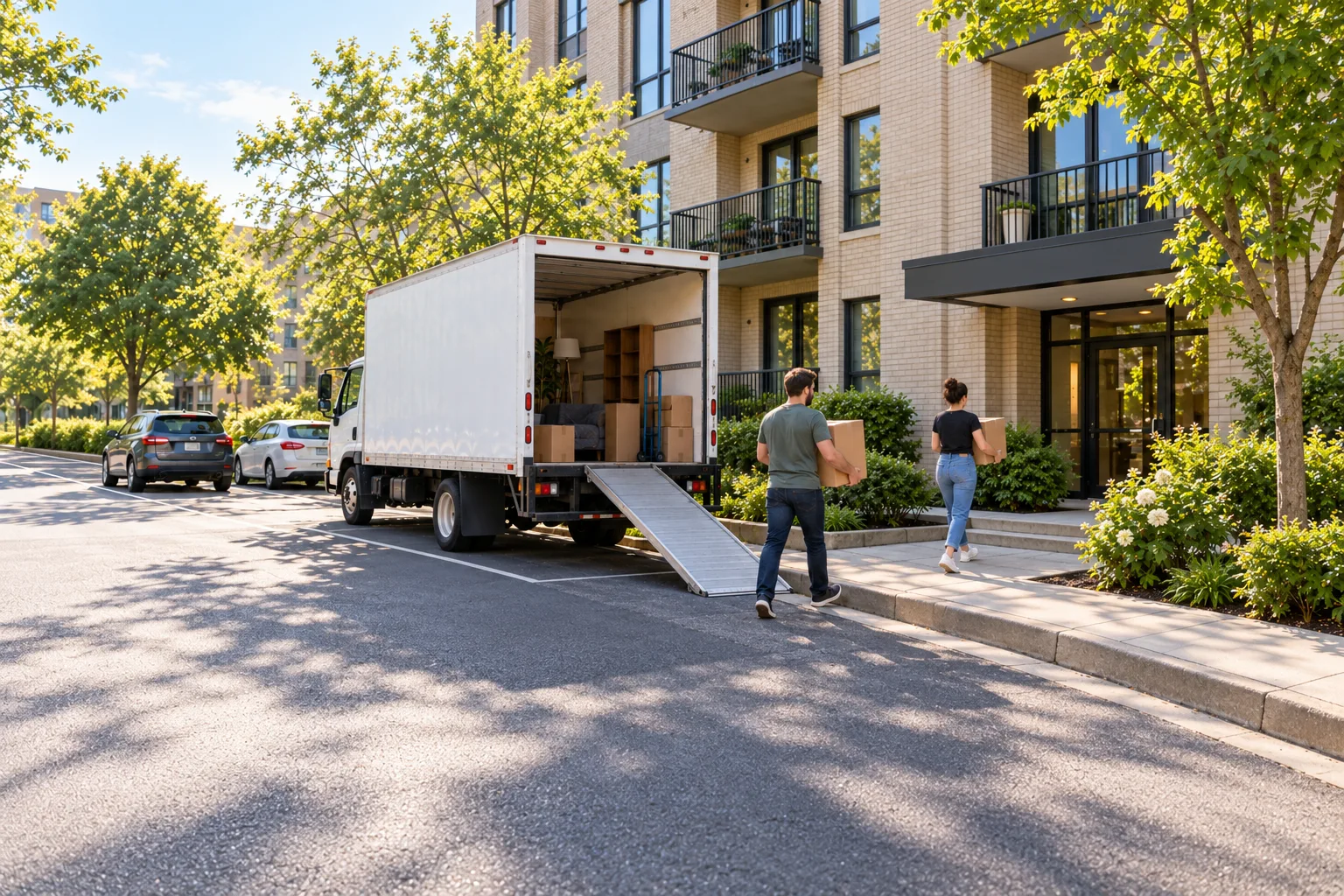
It reads the plate and checks it against the same list your office keeps.
If your enforcement provider runs Parkva Patrol, the patrol vehicle reads plates as it drives and checks each one against your property’s permits and guest passes, day or night. A car a resident registered at noon is already on the list for the evening pass. And before anyone writes a ticket or asks for a tow, the plate is checked again, live, so a car is judged on what’s on file at that moment, not on what the list said an hour ago.
Your office can make the same check at the desk. Type a plate and Parkva tells you whether that car may park right now, and what on file decides it.

No. Start with the list you already have: a tag log, a decal spreadsheet, a rent roll. Parkva brings the plates in, and the first time a resident signs in, their car is waiting with a simple “Is this your car?” to confirm. A rent roll comes in the same way, and Parkva reads it back to you before anything is saved, so a typo gets caught before it becomes a problem.
Patrol works from that one list from the first pass, while residents register and the old tags age out. If a lot needs to keep its tags a while longer, the patrol can learn which cars normally park there and point out the new ones, so your enforcement provider knows where to look first.
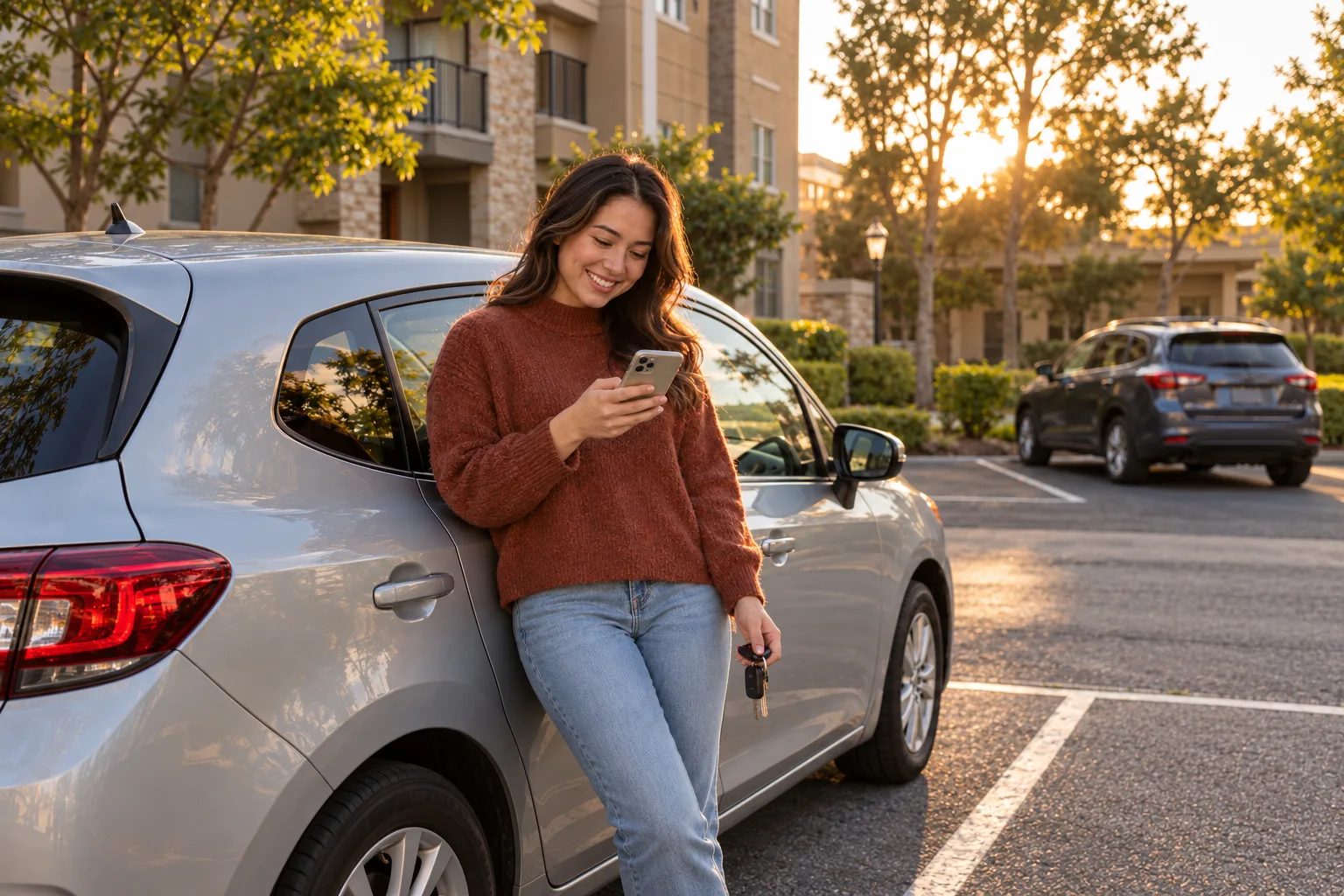
Pick a switch date a few weeks out and work backward from it.
Parkva Permit is where residents, guests, and the patrol share that one list: see how Parkva Permit works, or walk through an ordinary week of resident and guest parking.