How do you share resident parking fairly?
Keep each home’s everyday parking included, offer carports and covered spaces on their own, and let an extra car pay monthly, with the price shown first.
In short
- Share it in layers. Everyday parking comes with the home, the better spaces are a choice, and an extra car pays monthly.
- Carports, covered spaces, and garages go in their own area that residents can choose to pay for by the month or the year.
- The resident sees what an extra car costs before adding it, and the car is permitted once it’s paid for.
- Residents make and change these choices in their own portal, without calling the office.
Share it in layers. Everyday parking comes with the home, up to the number of cars the home includes. The better spaces, like carports, covered spaces, and garages, go in an area of their own that residents can choose to pay for by the month or the year. And a car beyond the ones the home includes pays a monthly charge the resident sees before they add it. Everyone can tell what comes with the home and what’s a choice, and nobody has to win a race to the carport.
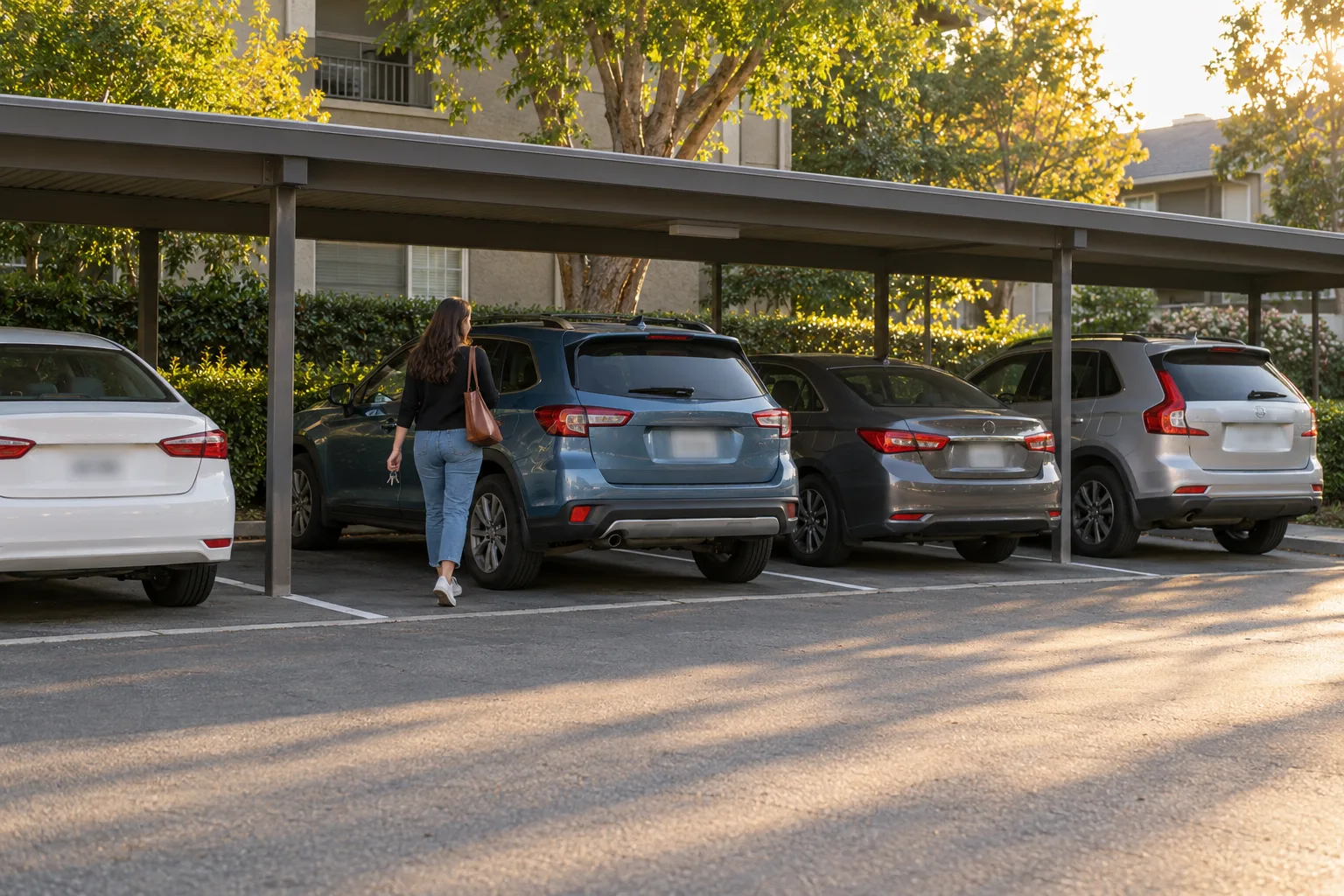
First come, first served sounds fair until you watch it work. The covered spaces go to whoever gets home first, every night, so the resident who works late never gets one, year after year. A home with four cars takes four spaces while a neighbor with one car circles the lot at 9 PM.
None of these are bad neighbors. They’re all following the only rule there is, which is to get there first. What’s missing is a line between what comes with the home and what someone chooses beyond it. Draw that line, and every complaint about the lot gets easier to answer, because you can point to a rule that isn’t a judgment about anyone.
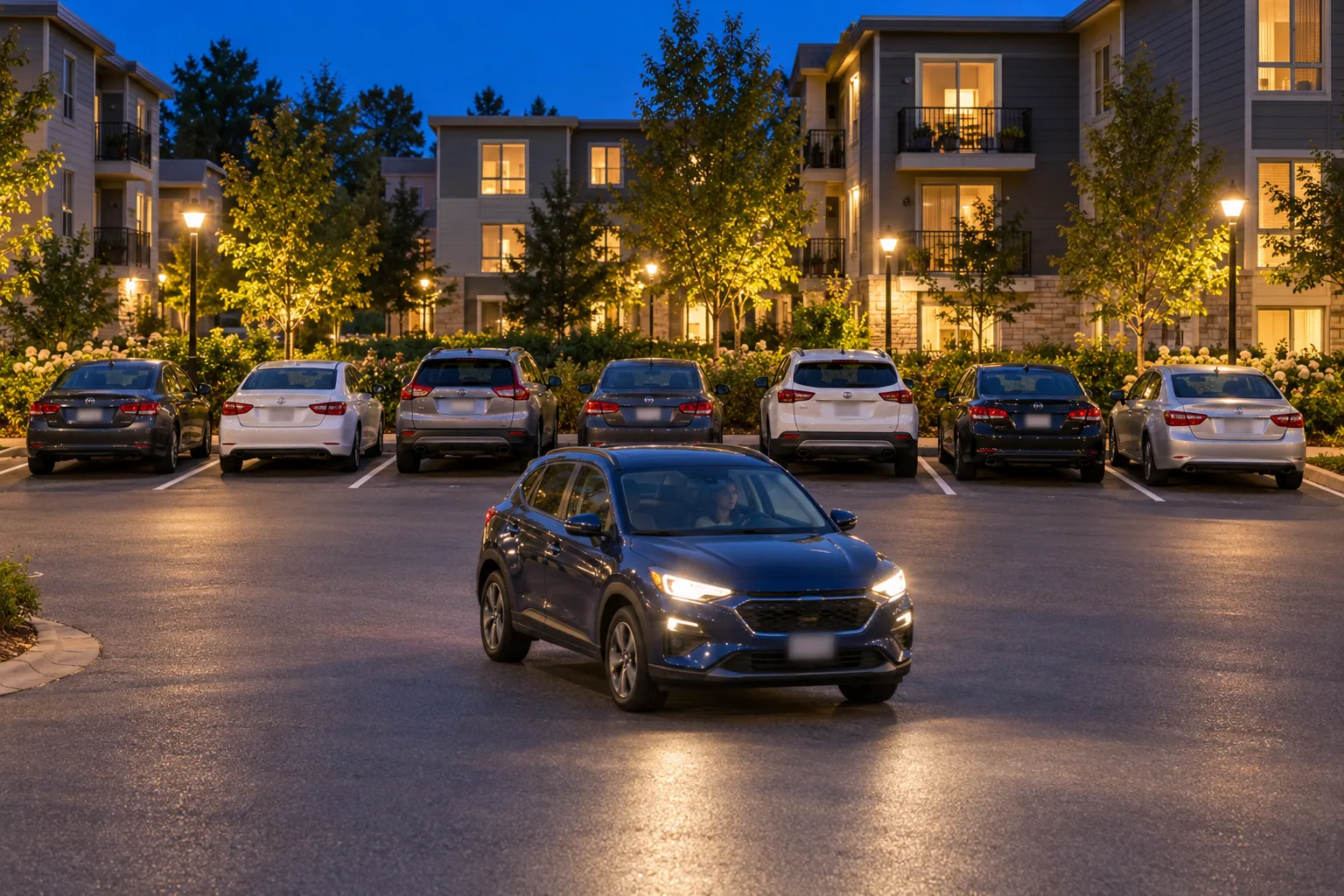
Before Parkva · first come, first served
What stays included is your call, zone by zone. A good place to start is what residents already have: keep everyday parking in the main lot included for each home, up to the number of cars the home comes with. If some homes already hold a carport or a deeded space, keep those exactly as they are.
In Parkva, you can keep an area for just the homes that hold it, at no charge, so a row of assigned carports stays with those homes, and a car one of them adds later is covered there too. Their parking doesn’t change because you start offering other spaces.
Say this first when you tell residents. Someone reading about covered spaces for a monthly price should see right away that their own parking hasn’t changed. A map of the lot with the included areas marked in one color settles most questions before anyone has to ask them.
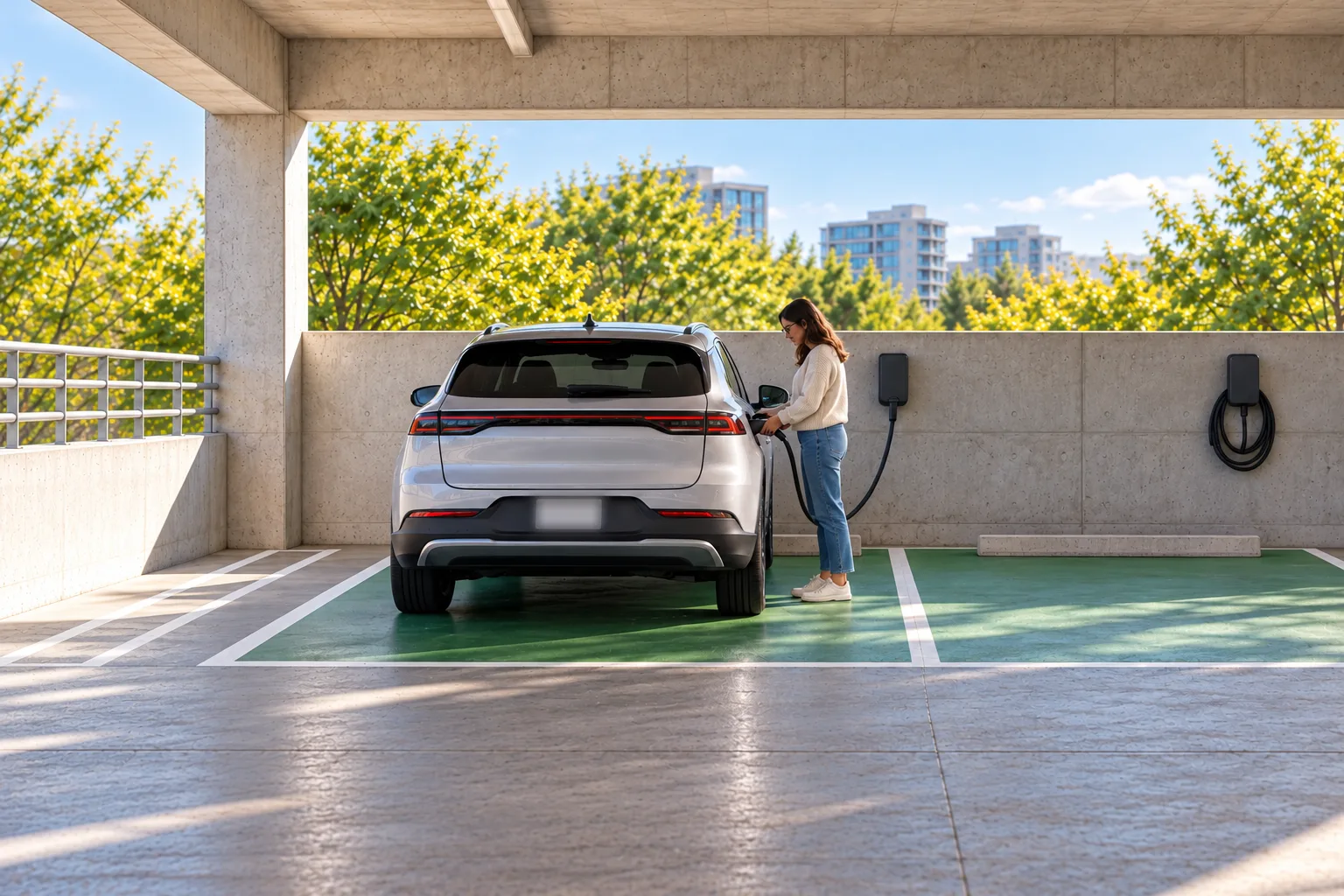
Give them an area of their own. The covered spaces, carports, and garages nobody already holds, and any storage or overflow parking, each go in their own area, which residents can choose to pay for by the month or the year. Everyone’s included parking in the main lot stays as it is.
The resident chooses in their own portal: which car, which area, and monthly or yearly where you offer both. They pay on one screen with a card, Apple Pay, or Google Pay. A code on the carport’s sign takes a signed-in resident straight to that checkout, so someone standing under the roof wondering how to get a space can get one right there. Where you number the spaces and let residents choose, they pick the exact space as they pay.
It’s the same lot it always was. The difference is that the covered space goes to someone who chose it, at a price everyone could see, instead of to whoever got home first.
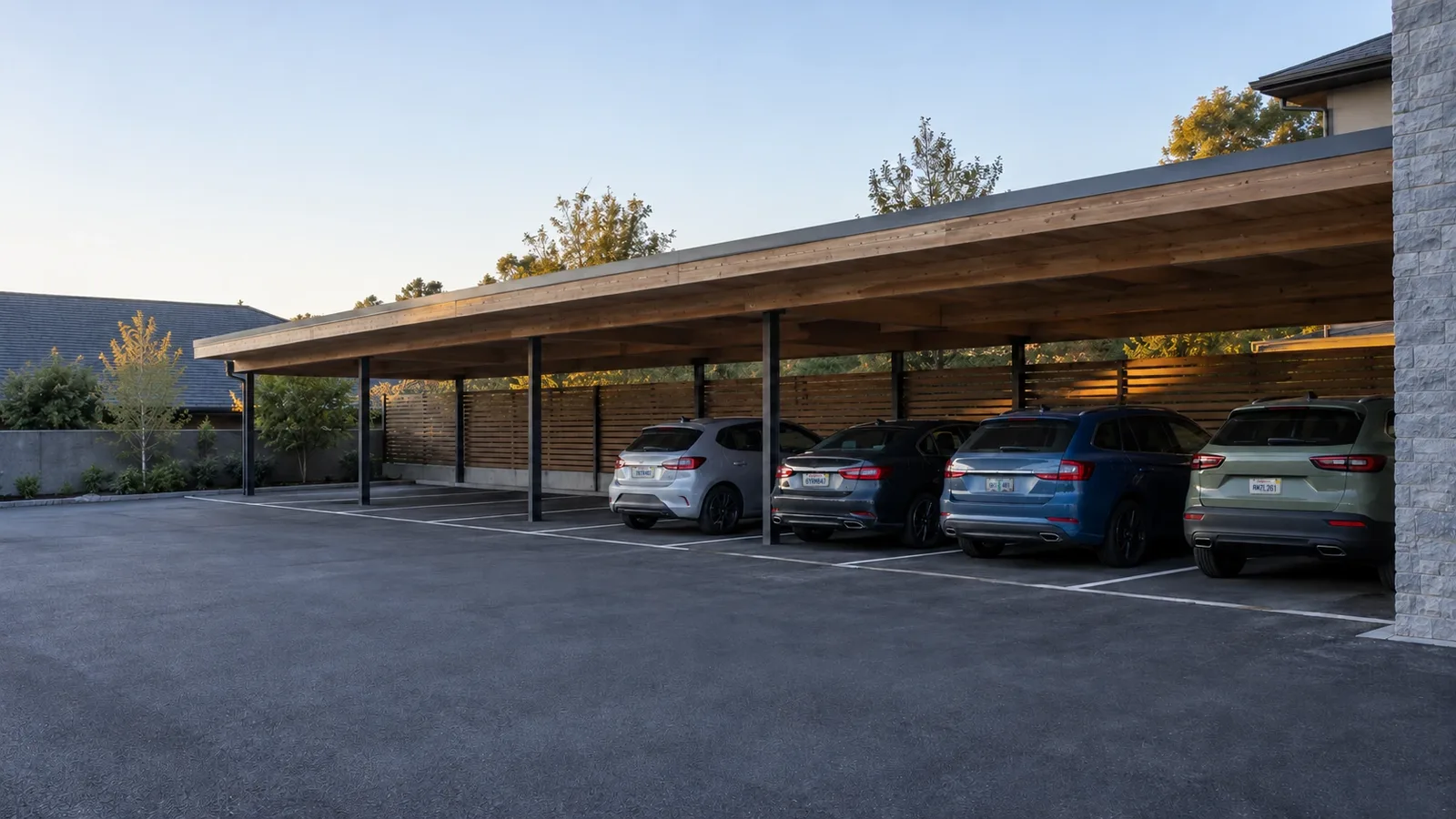
Give each home a number of cars it can register free, and put a monthly charge on each car beyond that, so one home’s third and fourth cars don’t take the spaces its neighbors need. In Parkva that can be one flat charge for every extra car, or tiers, where a third car costs one amount and a fourth another. The resident sees the price before adding the car, and its permit starts once it’s paid for.
That’s the whole conversation, settled before anyone parks: here’s what comes with your home, and here’s what another car costs. Nobody at the office has to judge how many cars is too many for one household.
Two things worth doing on your side. Choose the number of free cars with the size of your lot in mind, because a charge doesn’t make a new space. And if you already bill for extra parking with rent or dues, leave the extra-car charge in Parkva switched off, so nobody pays twice.
Yes. Done by hand, every switch is a call to your office and a billing adjustment someone works out on a calculator. In Parkva, each resident chooses parking for each of their cars in their own portal, pays there, and manages it there. Moving up to a covered space charges the difference for the rest of the current period. Moving down takes effect at renewal. Cancelling keeps the space until the end of what’s been paid for, and the resident can undo it before then. If a card fails at renewal, the car stays permitted while the payment is tried again.
Put when each change takes effect in your announcement, next to the prices. A resident deciding whether to keep a carport through the summer wants to know when a change happens as much as what it costs, and knowing it up front is what keeps the question off your desk.
Walk the lot at 9 PM on a weeknight with a printed map and two colored pens.
See how paid parking works on a property, and how residents manage their own parking with Parkva Permit. And the paid parking calculator asks a few quick questions about your property and shows what paid parking could bring in.