Why properties charge for guest parking, and how to keep it fair
A price on guest passes keeps guest spaces for guests and earns from parking you already have. You choose how passes are sold, and every home sees its limits.
In short
- A price on guest passes keeps the guest spaces open for real guests, and every pass earns the property something from spaces it already has.
- You choose how passes are sold, by the night, the day, the week, or the hour, or a weekend bundle, and free guest credits for each home are one more option.
- Guests pay from a link on their phone, and the plate goes straight onto the list the patrol checks.
- Limits that belong to each home keep one unit from filling the guest spaces, paid or not.
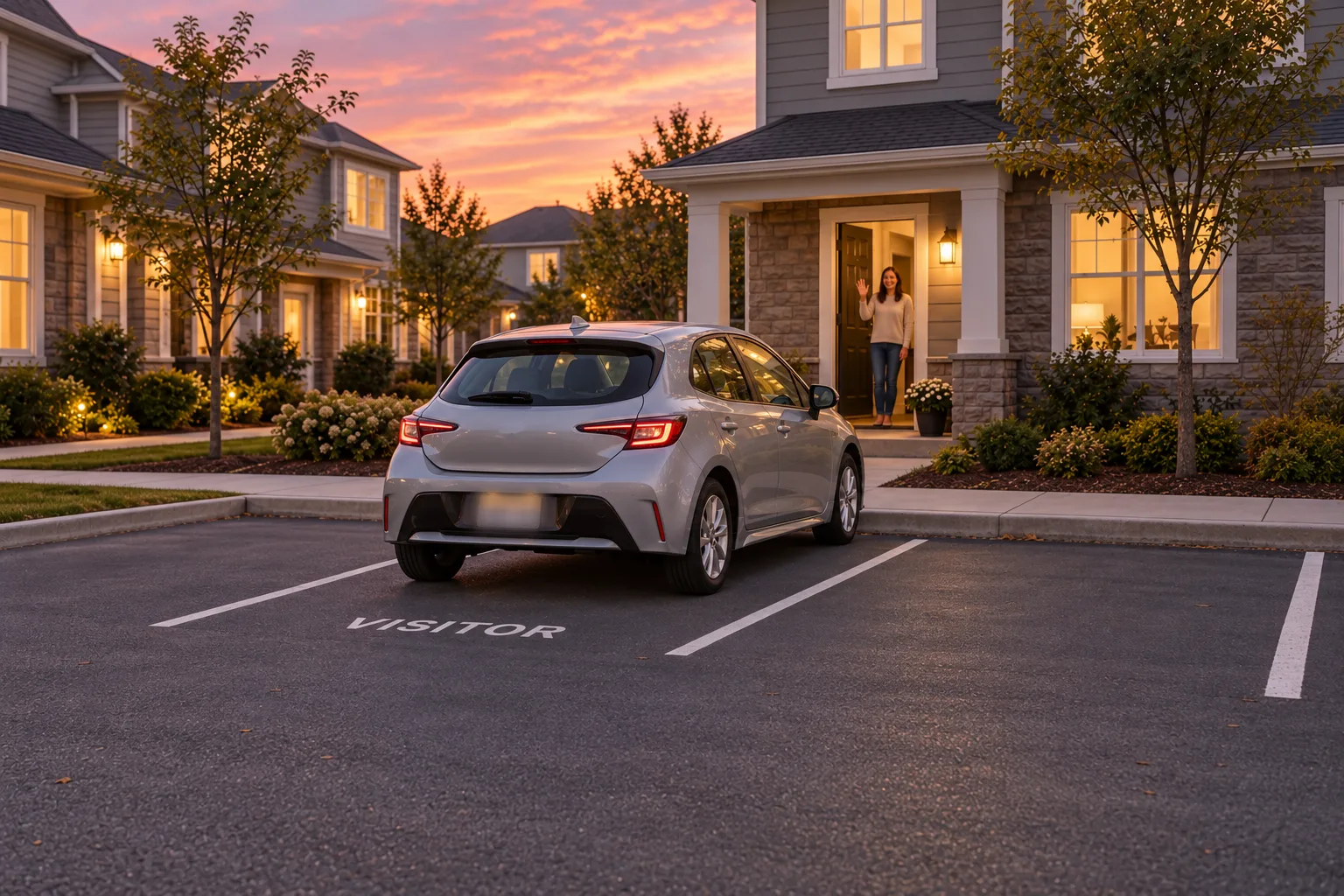
To keep the guest spaces for guests. The truck that has sat in visitor parking for a month, the second car that never leaves, the vacation rental whose guests fill the lot every weekend: when a guest space costs nothing, it gets used up. Put a price on the guest pass and those spaces go back to the people who are visiting, and every pass earns the property something from spaces it already has. You choose how passes are sold, by the night, the day, the week, or the hour, and every home has the same clear limits. The guest pays from their phone, and the patrol sees the pass right away.
Because free and unlimited eventually means full. When nothing separates a weekend visit from a car that has quietly moved in, the guest spaces fill up with the second kind, and residents who have someone visiting can’t find a space for them. The complaints land on your desk, and there’s no rule to point to.
A price on the guest pass gives you that rule. Every stay gets an end time everyone can see, so the car that has been there for three weeks either pays for those weeks or moves on, and the space opens up for someone who is actually visiting. And every pass earns the property something from spaces it already has, with no gates or meters to put in.
Your way, because paid guest parking isn’t one size fits all. In Parkva you pick the passes guests can buy and set what each one costs: a night, a day, a week, by the hour, or a weekend bundle. You decide when an overnight pass ends, and if you change a price later, the code on your printed sign keeps working.
You can also give every home free guest credits each month, as one more setting in the mix. You choose how many, and whether unused ones roll over. When a resident adds a guest, it uses a credit and the guest’s car is permitted right away, no card needed. The resident’s portal shows how many credits are left this month, and when they run out, it points them to the guest link, where the guest pays.
Whatever mix you choose, it’s the same rule for everyone, and nobody at the office has to decide who’s overdoing it.
The resident sends a link from their own phone, the same way they’d text an address. The guest opens it, enters their plate, picks a pass, like one night or a week, and pays with Apple Pay, Google Pay, or a card. Nothing to download, no account, and the receipt arrives by email or text.
The moment they pay, the plate is on the list the patrol checks, with the pass’s end time. There’s nothing to print or leave on the dashboard, so if your enforcement provider comes through at 2 AM, that car is already accounted for.
The money side is plumbing. Each payment divides automatically when it’s made, between the property and anyone it agreed to share with, so there are no invoices or checks going back and forth.
Treat them as what they are: guests. Residents keep their long-term permits. An owner who hosts a short-term rental sends their guests the property’s guest link along with the check-in details, and the guests buy a night or a week of parking like any other visitor, within the same limits as every other home.
There’s nothing separate to set up, because the rental doesn’t need its own rules. A busy rental simply pays for the parking its guests use, instead of crowding out the people who live there year-round.
Limits that belong to the home, not to the guest. Parkva counts two things for each home: how many guests can be parked at once, and how many stays it can have in a rolling 30 days. Every pass made through that home’s link counts, free or paid, so paying never buys unlimited parking. And a resident can’t put their own car on a guest pass.
Residents see where they stand right in the portal, how many guests their home can have and how many are in use, so the limit is never a surprise at the curb. If a car keeps coming back on the same home’s link, your office sees it on a list and decides what’s fair: add it to the home, allow it, or stop the passes.

Walk the lot on a weeknight, then write the rule down before you set anything up.
See how paid parking works on a property, and how guest passes, payments, and limits work together. And the paid parking calculator asks a few quick questions about your property and shows what paid parking could bring in.