Where should the moving truck park?
Give movers a day pass with your parking directions and an end time, so the truck has somewhere to be that isn’t the fire lane.
In short
- Decide where movers park and for how long, then let them buy a day pass that carries your directions and its end time.
- Each day of the pass is 24 hours from when it’s bought, and you choose the longest pass anyone can buy at once, up to seven days.
- The moment the mover pays, the plate is on the list your enforcement provider checks, labeled Moving Van, with its end time.
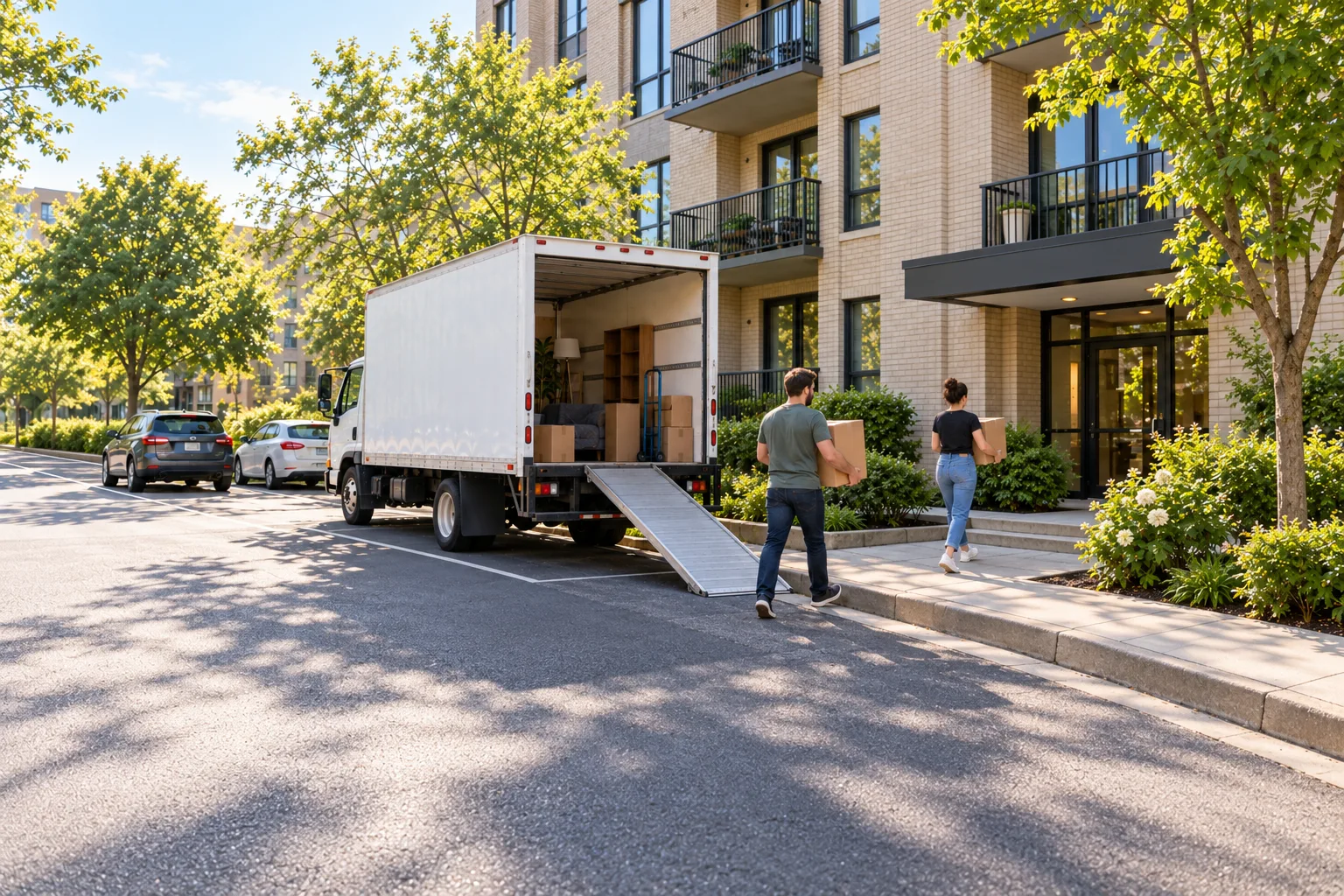
In a spot you choose before moving day: a loading area or a few spaces near the door, clear of the fire lane and the entrances. Put it in a sentence a driver can follow, decide how long a truck can stay, and let the mover buy a day pass from your property’s parking page or the code on your parking sign. In Parkva, the pass carries your directions and the time it ends, and the plate goes onto the list your enforcement provider checks. The truck has somewhere to be that isn’t the fire lane, and nobody has to call the office to explain it.
With a cone and a phone call, moving day runs on whoever picks up. The truck pulls in at 8 AM, sees nowhere obvious to go, and stops in the fire lane with the ramp down. A neighbor calls the office. The resident calls the office. Your enforcement provider sees a truck with no permit and asks you what it’s doing there, and nobody can say how long it’s meant to stay.
Nothing in that morning is anyone’s fault. The driver has never seen your property, the resident has a hundred other things to arrange, and a cone only says where not to park. What’s missing is two answers, decided before the day: where the truck goes, and until when.
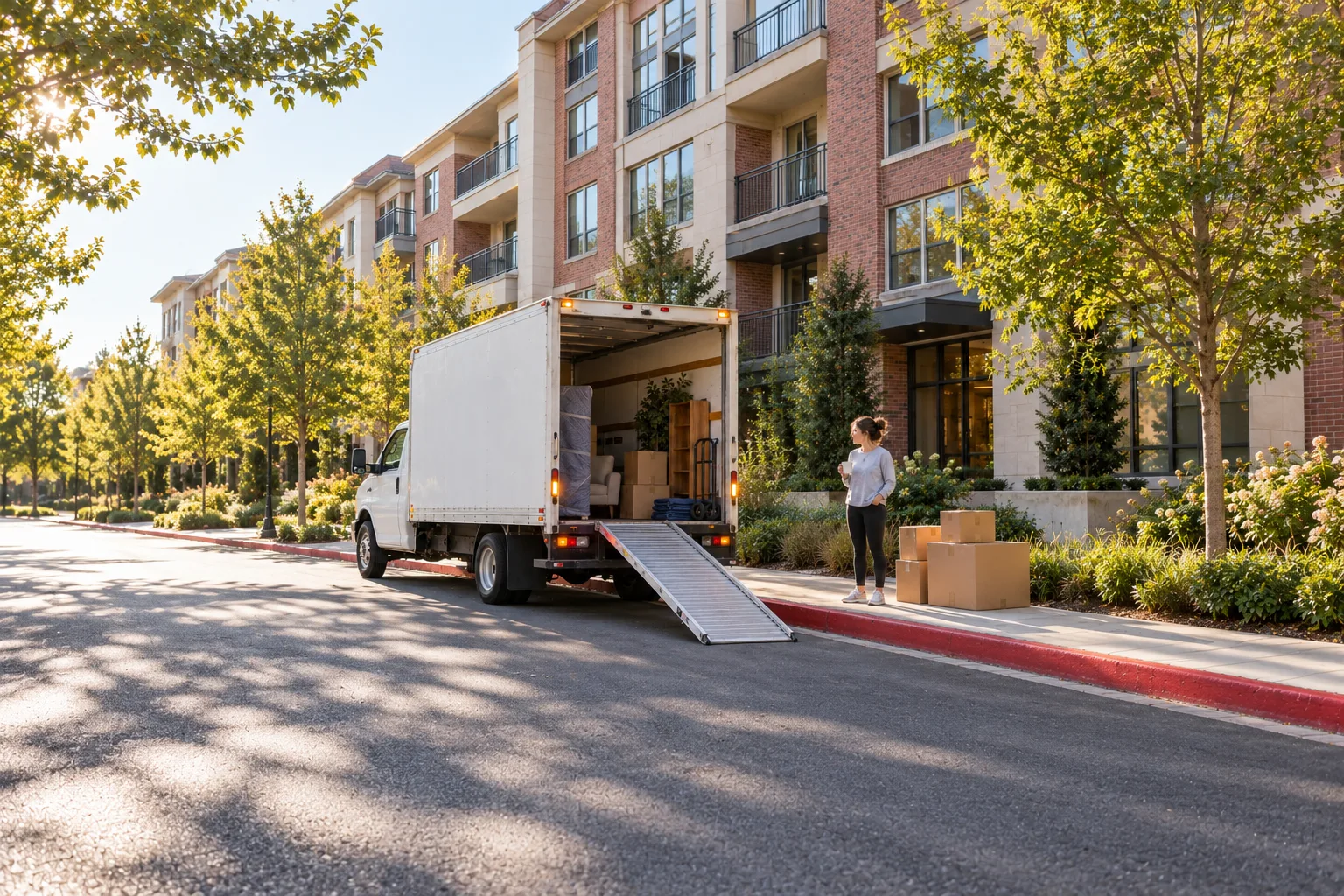
Before Parkva · a cone and a phone call
The same way a guest does. Whoever is booking the truck opens your property’s parking page, or scans the code on your parking sign, enters the truck’s plate, and picks a Moving Van pass. They pay with Apple Pay, Google Pay, or a card, with nothing to download and no account.
You set the price of a day. Each day of the pass runs 24 hours from the moment it’s bought, and you choose the longest pass anyone can buy at once, up to seven days. A pass bought at 9 AM on Friday covers the truck until 9 AM on Saturday, overnight included.
If your property also gets trailers, RVs, or contractors’ vans, each has a day pass of its own, under its own name. So when a contractor’s van spends three days outside a kitchen remodel, your enforcement provider sees “Contractor” beside its plate, not a mover who forgot to leave.
On the pass itself. You write a “Where to park” note when you set up the pass, and Parkva shows it on your parking page before anyone buys and on the pass after. If someone else is driving, the buyer can send them the pass from the same screen, so your directions end up on the phone in the cab.
Write it for someone who has never been to your property and is reading it in the cab before they pull in. Name what they’ll actually see: “Use the loading area beside Building C. Enter from Oak Street and keep the fire lane clear.” One landmark beats three rules.
Then test it. Hand the note to someone in your office who doesn’t handle parking and ask them to walk it from the entrance. If they stop to ask a question, the driver will too, and the driver will be holding one end of a sofa.
Most of it. When you add a new resident with a future move-in date, Parkva invites them a week ahead to set up their parking, and checks in again before the day. Cars they register early are covered from move-in day, so their own car is settled before the truck is.
Send your parking page with the rest of your move-in details, and ask them to forward it to their movers. The movers can buy their pass ahead of time, as long as they know the clock starts when they buy it: a pass bought the night before has already used part of its first day by morning. Buying it on arrival is often simplest.
That leaves two separate arrangements, both sorted before the day: the resident’s car is on their permit, and the movers know where to park and how to get their pass.
Yes. They see the truck’s plate, with “Moving Van” beside it and the time the pass ends. The moment the mover pays, the plate is on the list the patrol checks, so there’s nothing to print and nothing to tape inside a windshield. If your enforcement provider comes through at noon, that truck is already accounted for.
Give them the same directions you gave the movers, so everyone is working from one plan: the area you approved, and how long a pass can run. If the move runs long, whoever has the pass can add a day from their phone, without calling the office. When the pass does end, the truck is a vehicle like any other again. Moving day gets an end time everyone knew in advance, the movers included.
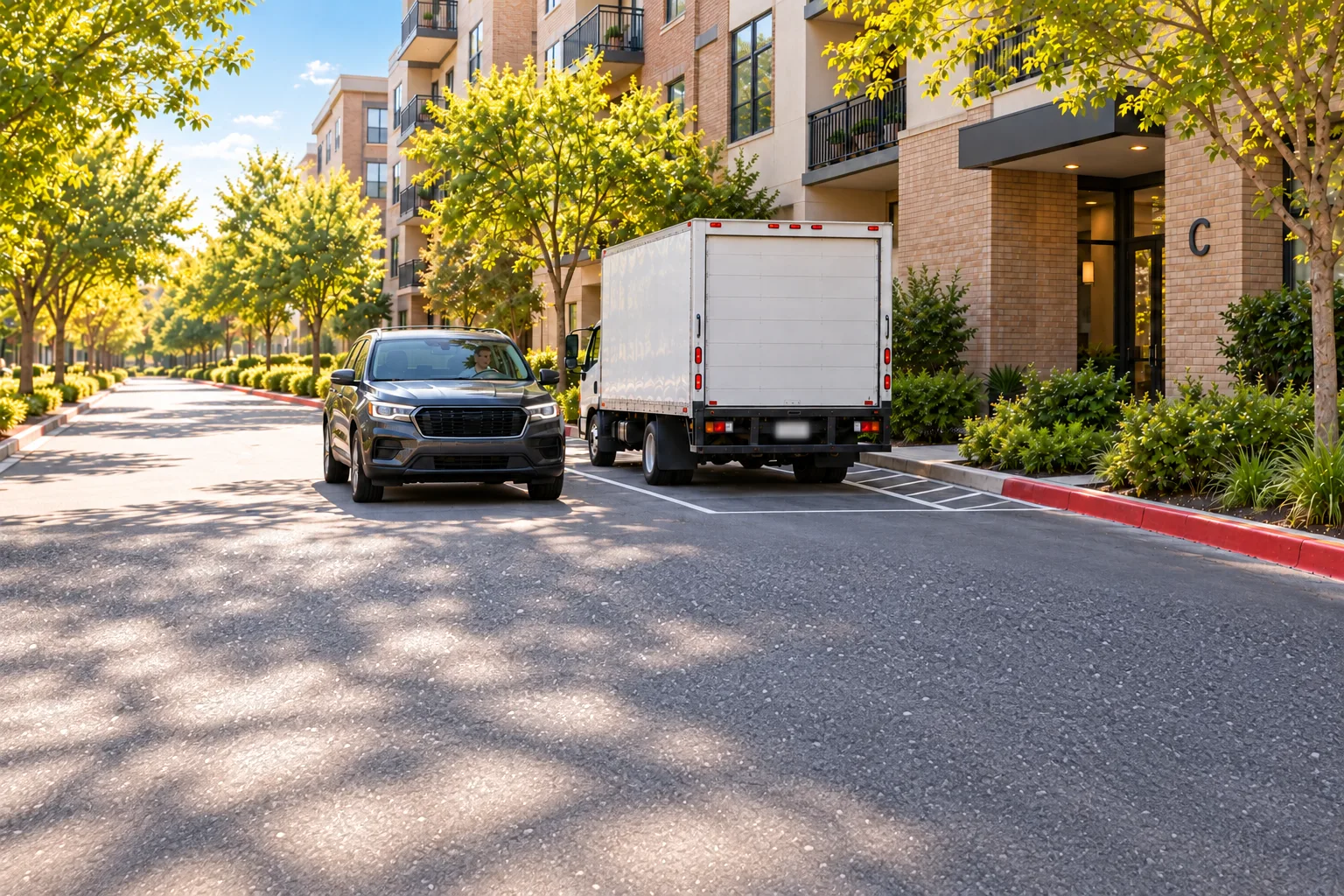
Walk the route a truck would take, from the street to the door, and decide where you’d want it if you were the neighbor.
Each pass also earns the property something for the spaces moving day takes up. See how paid parking works on a property. And the paid parking calculator asks a few quick questions about your property and shows what paid parking could bring in.