When a parking ticket works better than a tow
A tow is the heaviest answer to a parking problem. A ticket written on the spot is a real consequence, while the car stays where it is.
In short
- A ticket is the step between a warning and a tow. It’s a real consequence, and the car stays where it is.
- Your enforcement provider, or your own staff, writes it on the spot from the patrol, with the photos on the record.
- Drivers pay from their phone or appeal with their own photos, and an appeal pauses the due date.
- A private parking ticket is the property’s own charge, so your signs and written rules matter, and some states spell out the details.
A ticket fits the moment when a warning didn’t work and a tow would be too much: the car that keeps parking in someone’s reserved space, the second car that was never registered, the guest pass that ran out days ago. It’s a real consequence, but the car stays where it is. The driver can pay from their phone, and if they think it’s wrong, they can appeal with photos. A ticket is meant to change the habit without taking anyone’s car.
When you need more than a reminder and less than a tow. A warning has already explained the rule. A tow means the car leaves, the driver has to get it back, and somebody’s day gets much worse.
A ticket sits in between, a clear consequence the driver can deal with on the spot. Decide with your enforcement provider ahead of time which problems get a warning, which get a ticket, and which still call for a tow, like a car blocking a fire lane. Writing that down is what makes a program feel fair: the same situation gets the same answer, whoever is on shift that night.
Whoever enforces your property’s rules. That can be your enforcement provider, whether it’s a tow operator, a security operator, or a parking enforcement operator. It can also be your own team, if you run your own patrol the way a campus, a hospital, or a large HOA might.
In Parkva, ticketing is switched on for the enforcement team and authorized for your property, and the fine for each kind of violation is set ahead of time. The officer never picks a number at the curb. They apply the amount everyone already agreed to, and a violation with no fine set can’t be ticketed at all.
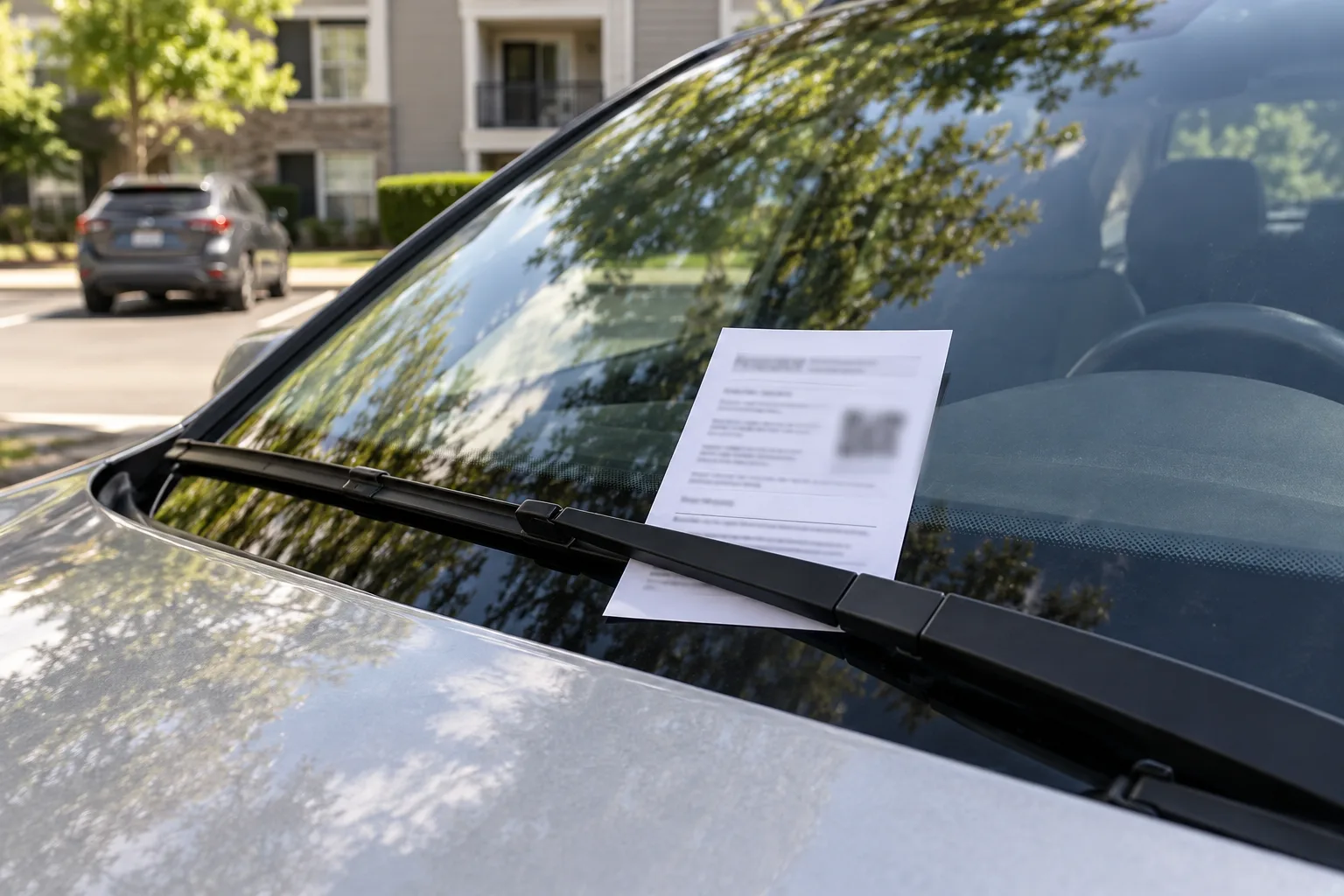
It starts with the plate, not a judgment call. The patrol checks the plate against your property’s permits, and right before anything is issued, the record is checked again, live, so a guest who paid five minutes ago shows up as paid. The officer sees everything on file for that car, confirms, and the ticket prints in the vehicle with a code the driver can scan.
If your property requires a warning first, Parkva won’t issue a ticket until there is one, and the warning and the ticket stay on the same case. So when a driver says “nobody warned me”, the answer is one screen away. A resident on file hears about a ticket 60 minutes after it’s written, not while the officer is still standing beside the car.

Right from the ticket. It carries a QR code, a short web address, and a payment code. The driver opens it on their phone and sees the violation, the due date, and the officer’s photos, along with who issued it and how to reach them. They can pay with Apple Pay, Google Pay, or a card, or tap to appeal.
An appeal takes their reason and their own photos, and it pauses both the payment and the due date while someone reviews it. By default the property manager decides, or your enforcement provider if you’ve set it up that way. A driver who can see the photo and make their case on a phone has somewhere to go besides your front desk. And ticket payments go to whoever wrote the ticket, so your office never has to handle the money.
A ticket on private property isn’t a fine from the city. It’s the property’s own charge for breaking its posted parking rules, which is why your signs and your written rules, the lease or the HOA’s rules, carry so much weight.
The details vary by state and city. Florida, for example, has a law on private parking charges that spells out what the signs at the entrance must say, what the notice on the car must say, and how a driver can dispute it. California lets a city set rules for private lots that are open to the public, including how a driver contests the charge. So before the first ticket goes on a windshield, check three things with whoever advises the property: your signs, your lease or HOA rules, and your state and city rules on private parking charges. Then put the answers in the patrol’s instructions.
Start with the problems you actually see, not with every rule in the book.
Follow a ticket from the patrol to a paid or appealed charge, and see how the property and its enforcement provider work from one record.
Sources
- Florida Statutes §715.075, Vehicles parked on private property; rules and rates authorizedThe Florida Legislature.Read .
- California Vehicle Code §21107.8California Legislative Information.Read .